Slab Leak Repair in North Richland Hills, TX
Reliable slab leak repair North Richland Hills TX homeowners depend on to protect foundation integrity. When pressurized water lines fail beneath your concrete foundation, fast action stops foundation shifting, flooring ruin, and skyrocketing water bills.
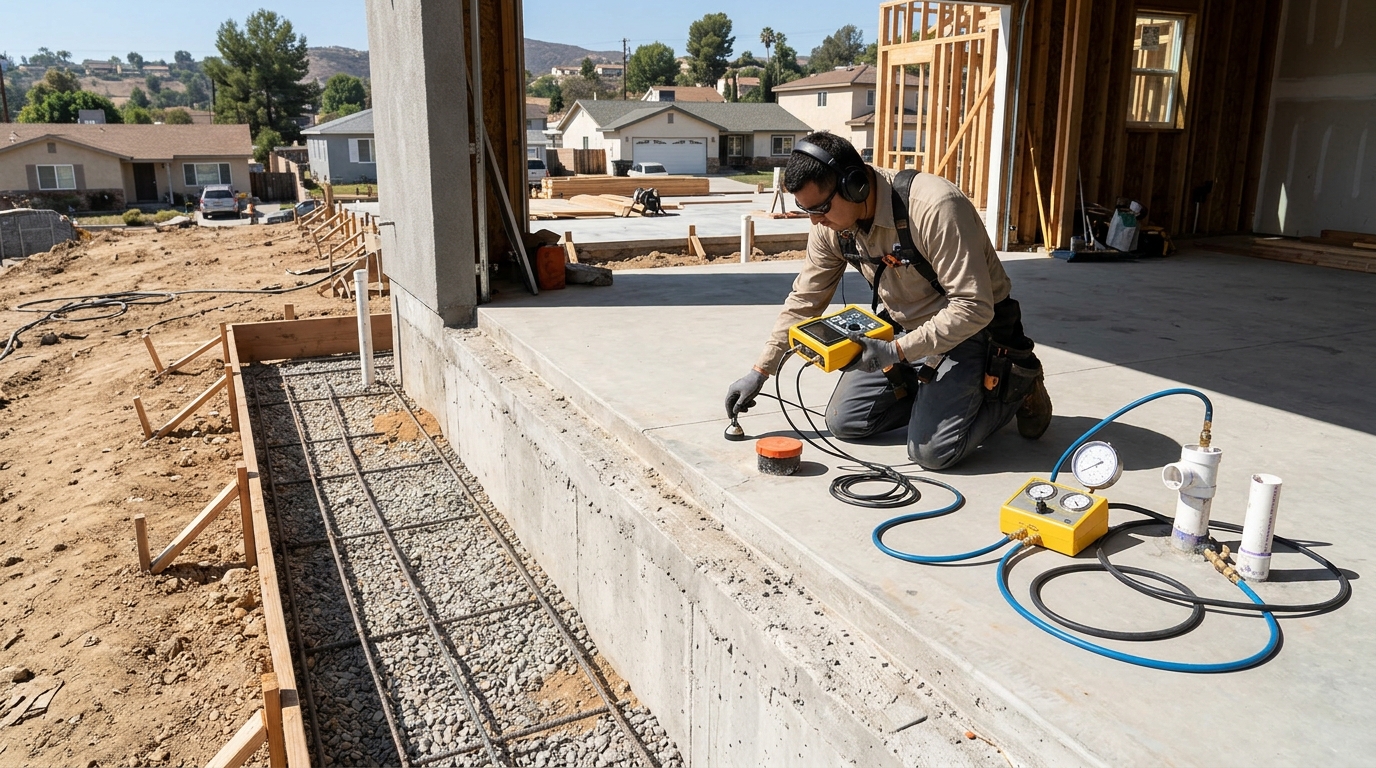
Understanding Slab Leaks in North Richland Hills
A slab leak occurs when a freshwater pressurized supply line or wastewater drainage pipe beneath your home’s poured concrete foundation cracks, pits, or splits. In North Richland Hills, where single-family homes span from established neighborhoods constructed in the 1960s and 1970s to modern master-planned communities, slab foundations are the universal construction standard. While concrete slab-on-grade foundations provide solid bases, they conceal critical plumbing lines directly inside gravel beds or buried beneath thick structural concrete.
When a leak develops unnoticed beneath this structural mass, water escapes at substantial velocity and pressure. If you are noticing damp carpets, unexplained warm floor spots, or an active water meter dial while all taps are shut, you need a dependable slab leak plumber North Richland Hills property owners trust. Leaving an active water leak under slab North Richland Hills unaddressed can lead to severe soil erosion, concrete heave, and severe interior structural damage.
Why Expansive Clay Soil Drives Slab Leaks Across Tarrant County
The primary physical driver behind under slab leak repair North Richland Hills requests is the geology of North Texas. North Richland Hills sits directly atop expansive Blackland Prairie clay soil formations. These dense clay soils possess dramatic swelling and shrinking characteristics. During prolonged hot Texas summers and drought spells, the clay soil dries out, contracts, and pulls away from grade beams and footings. When heavy spring or autumn downpours arrive, the clay absorbs moisture rapidly, expanding with tremendous hydraulic force.
This cyclic movement exerts uneven upward and downward stress against the concrete slab. As the slab shifts subtly, copper water pipes buried within the substrate flex, rub against rough aggregate gravel, and experience mechanical stress. Over years of thermal expansion, friction, and ground movement, copper lines develop pinholes or split near soldered joints, creating a dangerous leak under foundation North Richland Hills structures.
Warning Signs of a Slab Leak in Your Home
Because pipes are buried beneath structural concrete, leaks rarely present as geysers. Instead, watch closely for these common residential warning signs:
- Unexplained Warm Spots on Floors: A hot water slab leak often makes tile, hardwood, or carpet feel distinctly warm under bare feet.
- Sound of Running Water: Hearing a faint rushing or hissing sound behind walls or under floors while all faucets, showers, and appliances are completely off.
- Spinning Water Meter: Checking your water meter out by the street and noticing the flow indicator triangle or digital dial actively turning when no water is being consumed.
- Drastic Water Bill Surges: An unexpected spike in your monthly North Richland Hills municipal utility statement without changes in household habits.
- Dampness, Spongy Flooring, or Mildew Odors: Moisture rising through concrete pores that warps engineered wood, bubbles linoleum, or breeds musty mildew under carpets.
- Hairline Foundation and Sheetrock Cracks: Shifts in foundation support causing cracks along baseboards, door frames that stick, or exterior brick mortar fractures.
Notice Any of These Symptoms in Your Home?
Pinpoint the exact location before digging or breaking concrete floors.
What to Do Immediately If You Suspect a Slab Leak
Taking prompt, calm steps immediately upon discovering signs of an under-slab leak minimizes structural harm and limits water waste:
- Locate and Shut Off Your Main Water Supply: If the leak appears active or water is seeping through flooring, turn off your residential shutoff valve (commonly located in an interior utility room, garage, or in a ground box near the street curb).
- Check Your Water Heater: If the floor is warm, your water heater may be discharging hot water continuously. Shut off the cold water intake valve on top of the water heater to isolate the hot water loop.
- Document Visible Moisture and Flooring Damage: Take high-resolution photographs and video of damp flooring, peeling baseboards, or reading levels on your water meter for future insurance reference.
- Avoid Unplanned Jackhammering: Never permit anyone to start breaking your slab based on guesswork. Insist on professional electronic acoustic testing before any repair approach begins.
Comprehensive Detection and Repair Process
Resolving a foundation water leak requires methodical diagnostic verification followed by the least invasive repair strategy possible for your layout:
We monitor the municipal meter, install precision pressure gauges on the plumbing system, and isolate the cold supply from the hot water loop to confirm which line is losing pressure.
Specialized acoustic ground microphones listen to high-frequency pipe vibration through concrete, while calibrated thermal imaging cameras track heat plumes from hot water leaks.
Transmitters trace the exact routing depth and path of your underground copper or PEX tubing, marking the failure point within inches.
Depending on line condition, home age, and location, we execute a direct spot repair, an overhead pipe reroute, or a complete water line repiping.
Slab Leak Repair Options and Cost Factors
Homeowners frequently ask about slab leak repair cost North Richland Hills considerations. Because every home layout and pipe failure is unique, pricing depends on specific engineering variables rather than fixed flat rates:
- Direct Spot Repair Through the Slab: If a pipe is easily accessible and the rest of the copper plumbing is in healthy condition, a small opening is cut through tile or concrete to repair the single localized breach.
- Non-Invasive Overhead Reroute: When concrete breaking would disrupt high-end flooring, cabinets, or load-bearing beams, abandoning the buried pipe and running modern PEX tubing through walls or attic space is often the superior long-term choice. Learn more on our slab leak reroute North Richland Hills service page.
- Whole-House Repiping: For homes with multiple prior leaks or aging, thin-walled copper, replacing all water lines provides permanent reliability. Read details on repiping North Richland Hills systems.
- Primary Cost Factors: Total repair cost is influenced by the accessibility of the leak, depth of the foundation slab, flooring restoration requirements, pipe material, and whether permits from the City of North Richland Hills are mandated.
Consult an NRH Foundation Leak Specialist
Speak directly with an experienced team member to evaluate your situation.
Specialized Under-Slab Plumbing Services
We provide comprehensive under-slab and freshwater diagnostic solutions tailored to North Richland Hills architecture:
Slab Leak Detection
Pinpoint exact underground line breaches using acoustic microphones and pressure differentials without destructive exploratory slab cutting.
Explore Detection →Hot Water Slab Leaks
Address burning hot flooring spots, runaway gas bills, and water heaters that cycle constantly due to thermal line expansion failures.
Hot Water Repairs →Slab Leak Rerouting
Bypass failed underground copper lines completely by threading resilient PEX lines through overhead attic pathways or wall chases.
Reroute Details →Whole-House Repiping
Eliminate recurrent slab failures permanently by replacing deteriorated underground copper or polybutylene with dependable PEX systems.
Repiping Solutions →Water Leak Detection
Locate hidden water leaks inside drywall partitions, above ceiling drywall, around shower pans, and along outdoor yard service lines.
Water Leak Services →Cast Iron Drain Replacement
Inspect, restore, or replace rotted, scaled cast iron sewer lines under older slabs causing recurring backups and foundation erosion.
Cast Iron Options →Insurance Claim Documentation
Receive comprehensive diagnostic reports, moisture readings, and photo documentation required by homeowner insurance claims adjusters.
Insurance Guidance →Local Service Areas
Dedicated coverage throughout North Richland Hills including homes near Smithfield, HomeTown, Loop 820, and neighboring cities.
View Service Areas →Schedule Service
Have questions or notice warning signs? Speak directly with our local diagnostic team to discuss next steps for your foundation.
Contact Our Team →Ready to Schedule an Inspection in North Richland Hills?
Call our dedicated phone dispatch line now to protect your foundation.